Land clearing equipment is a specialized engineering and agricultural machinery used to remove vegetation, trees, stumps, stones and various obstacles from land plots. It prepares the land for further development and use and is an indispensable category of equipment for any clearing operations. How to choose the right equipment for different projects? In this article we will answer this question.
The importance of choosing the right land clearing equipment
Choosing the right land clearing machine is critical to project safety and operational efficiency, and has a significant impact on environmental protection.
Improving work efficiency and meeting deadlines
Adaptive equipment — wood chippers and skid steer loaders — quickly removes trees, shrubs, and stumps, reducing labor costs and project timelines.
Direct impact on the overall project outcome
Appropriate clearing equipment not only ensures efficient cleanup operations, but also lays a solid foundation for future construction, agriculture, and other projects, maximizing the value of the land.
Ensuring the safety and accuracy of operations
Choosing the right equipment ensures safe and precise work. In tight spaces inaccessible to larger equipment, chainsaws and brushcutters provide neat and safe clearing, reducing risks to the operator and combining precision with personal safety.
Supporting environmentally responsible cleanup
Specialized equipment, such as wood chippers, allows for selective clearing, avoiding landscape damage, preserving topsoil, reducing erosion risks, and achieving a balance between development and environmental protection.
Avoiding unnecessary costs in the future
Overpowered equipment can damage topsoil, expose tree roots, cause erosion, and lead to significant restoration costs. Underpowered equipment cannot remove vegetation and roots, leading to rapid weed growth and costly re-work.

Types of land clearing equipment
Land clearing machines are diverse and are divided into three main types depending on their functions and application conditions: heavy engineering equipment, auxiliary specialized equipment, and portable small-sized tools.
Heavy engineering equipment
1. Crawler loader
Design features: Equipped with rubber tracks with a large contact area with the surface and excellent traction with the ground, which evenly distributes the weight of the machine.
Model classification: Divided into compact and full-size. Compact for mobility and flexibility, full-size for powerful operations.
Areas of application: Complex and difficult terrains — mud, swamps, bumps and steep slopes — with reduced damage to soil and vegetation.
Main functions: Digging, pushing, loading, unloading and backfilling; support for various attachments for versatile use.
2. Skid Steer
Key features: Compact body with extremely high maneuverability, the ability to turn on the spot without unnecessary use of maneuvering space.
Areas of application: Small, isolated projects in narrow operating areas, adjacent to buildings or completed landscapes.
Main functions: With special attachments, it can perform bush cutting, stump grinding, precise site leveling and debris removal; with a wood chipper attachment, it can also crush vegetation.
Advantages: Minimal environmental damage during operation, suitable for small-scale and finishing operations.
3. Wheel loader
Key features: Powerful engine, high fuel efficiency, large bucket capacity and high material handling efficiency.
Model classification: Large standard models - for large sites, small - for small construction sites, articulated - for better cross-country ability.
Applications: Debris removal, backfilling, material movement in open areas, and standard cleanup projects.
Main functions: Equipped with quick-change connectors for quick change of attachments - buckets, log grabs, wood chippers.
4. Backhoe Loader
Key features: Combines the functions of a wheel loader and an excavator - two machines in one with an excellent price/quality ratio.
Design advantages: Front loading bucket + rear hydraulic excavator boom with a clear division of functions for simultaneous performance of several operations.
Areas of application: Difficult terrain with uneven, muddy and rocky areas, complex obstacle clearance and earthworks on medium sites.
Main functions: Front - loading and moving debris; rear - tree removal, trenching and small-scale earthmoving. Can be equipped with hydraulic jackhammers and drills.
5. Bulldozer
Key features: Heavy, powerful equipment with a sturdy body, equipped with a thick metal blade and significant traction.
Classification of models: Small - for maneuverability, large - for large-scale intensive clearing, tracked - for difficult terrain.
Areas of application: Complete clearing and reconstruction of large open areas, site planning and construction road construction.
Main functions: Felling large trees, moving boulders, clearing dense bushes; rear ripper loosens compacted and hardened soil layers.
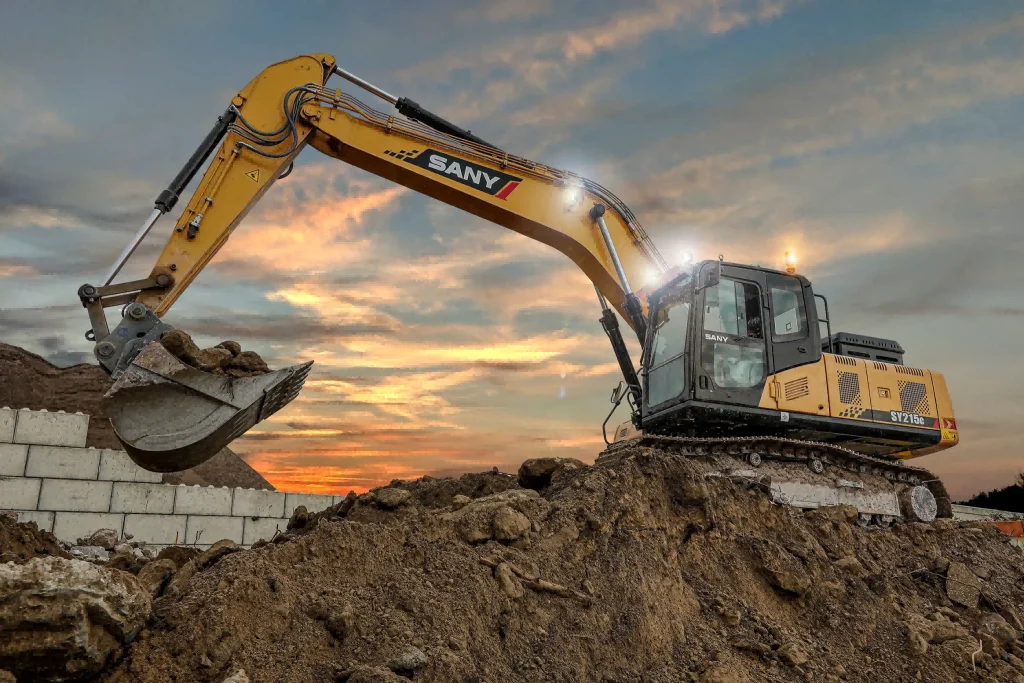
6. Excavator
Key features: Powerful motor, high control precision, flexibility in operation and the ability to perform precise obstacle clearance.
Classification of models: Mini models - for residential yards and small plots, standard - for medium-sized projects, full-size - for large-scale development.
Areas of application: Sites of all sizes, especially areas near buildings and fences where it is necessary to protect the environment.
Main functions: Excavation, pulling out deep tree roots, moving boulders, crushing concrete; with special attachments - precise cleaning of vegetation and debris.
7. Special forestry equipment
Key Features: Designed specifically for logging operations, the hull is thicker than conventional engineering machinery, with reinforced construction and resistance to harsh environments.
Areas of application: Dense forests, large-scale logging and clearing of forest lands, harsh field conditions.
Main functions: With special attachments, it performs tree felling, branch trimming, sawing and crushing vegetation, significantly increasing the efficiency of clearing.
8. Articulated dump truck
Key features: The frame bends flexibly, which provides excellent cross-country ability and high load capacity.
Areas of application: Difficult terrain - steep slopes, unevenness and inclines - for long-distance transportation of materials on large construction sites.
Main functions: Transporting stones, bushes and soil, often used in conjunction with excavators and wheel loaders.

Auxiliary specialized equipment
1. Stump grinder
Purpose: Special equipment for the final stage of clearing - removing stump residues.
Model classification: Small hand-held and large industrial models, also used as an attachment to heavy machinery.
Areas of application: Tree stump removal at various sites to prevent tree regrowth and ensure complete site clearance.
Main functions: Crushes stumps and roots into chips using a rotating cutting disc to completely remove underground residues.
2. Equipment for crushing wood and branches
Key features: Combines the functions of a brush cutter, mulcher and wood chipper - an environmentally friendly and efficient solution.
Areas of application: Recycling of plant waste at various sites instead of incineration to recover resources.
Key Features: Quickly turns trees, shrubs and branches into wood chips or organic mulch that can be left on the surface to improve the soil.
Processing capacity: Can process branches and trees up to 50 cm in diameter; available as stand-alone or mounted to a skid steer loader model.
3. Brush cutter and lawn mower
Key features: Combines the functions of a brushcutter and mower; there are powerful and portable models with clear directionality.
Areas of application: Abandoned areas, overgrown areas, dense vegetation where large machinery cannot operate, as well as laying firebreaks.
Key features: Powerful models cut through dense bushes and young trees; portable models remove weeds and perform precise trimming to eliminate fire hazards.
Portable small tools
1. Chainsaw
Key Features: Portable hand tool, small size, easy to carry and use.
Classification by power: Fuel, electric and battery-powered — for different operating conditions and power sources.
Areas of application: Manual removal of obstacles in narrow places and areas inaccessible to large machinery, logging and pruning.
Main functions: Cutting trunks and branches, laying firebreaks, wood processing.
2. Portable trimmer/lawn mower
Key features: Lightweight and maneuverable body with good handling, can work in tight spaces between obstacles.
Areas of application: Residential yards, gardens, small green areas and corner plots that are difficult to reach for large equipment.
Main functions: Cuts weeds and sprouts with a high-speed rotating nylon line for precise trimming of the area.
How to choose the right equipment for land clearing?
Selecting the right cleanup technique requires a comprehensive assessment of site conditions, project needs, budget, and regulatory requirements while minimizing environmental and ecosystem impacts.
Main selection factors
1. Basic site conditions
Area and scale of clearance: For commercial and large projects, heavy equipment (bulldozers, large excavators). For residential or smaller projects, compact equipment (mini excavators, skid steer loaders). Choose equipment based on your needs to avoid unnecessary costs.
Terrain features: For flat and dry sites - wheel loaders and standard excavators; for difficult terrain (dirt, steep slopes, rocky areas) - tracked equipment with better stability and less surface disturbance, which prevents water and soil erosion on slopes.
Vegetation and obstacles: For sparse shrubs and young trees - a skid steer loader with cutting attachments and a chainsaw; for dense shrubs and medium-sized trees - an excavator with a crusher and a grapple; for large trees - an excavator and a bulldozer with chainsaws; for areas with a large number of stumps and stones - additionally equip yourself with stump grinders and crushing attachments.
2. Project and cost factors
Project objectives and land use: Different purposes (construction, agriculture, environmental protection) determine the scope and precision of clearing. For example, areas near buildings and landscapes require precise and low-traumatic equipment, while large-scale development may require powerful heavy machinery.
Budget and cost control: For short-term projects, consider renting equipment to reduce the initial investment; for long-term and frequent use, consider purchasing. New equipment has high reliability and a warranty, while used equipment has a lower initial cost. Consider operating costs: fuel, maintenance, repairs, and insurance.
Additional precautions when choosing
Assess sensitive areas, wildlife habitats, and water bodies on the site in advance, mark buffer zones, avoid working in sensitive areas, or select specialized equipment with minimal impact.
For invasive species and special vegetation, use specialized equipment and processes to prevent the spread of the species and ensure complete clearance.
Familiarize yourself with local land clearing regulations in advance, obtain necessary permits, comply with zoning and environmental laws, and strictly prohibit illegal operations.
Conclusion
In summary, land clearing equipment as a key equipment for land clearing operations directly affects the work efficiency, construction safety, environmental performance and overall project costs depending on its correct selection. Only by combining the actual site conditions with the scientific selection and standardized operation of various land clearing equipment can we ensure proper site preparation, lay a solid foundation for further land development, agricultural production and engineering construction, and achieve a balance between efficient operation and ecosystem protection.
Frequently Asked Questions (FAQ)
What is the easiest way to clear undergrowth?
The simplest method depends on the scale: for large areas - skid steer loaders with shredding attachments (the most effective, as they immediately shred vegetation, preserving the soil structure); for small areas or limited space - heavy mowers with metal brushes; for manual clearing - ripper rakes or special brush cutters.
What is the cheapest way to clear land?
The cheapest way is to use labor-intensive methods: chainsaws, axes, and hoes for small-scale clearing. For medium-sized areas with a lot of debris, renting chainsaws, wood chippers, or tractors with buckets is an economical option. Hiring a professional construction crew is expensive, so doing the clearing yourself or renting equipment is the key to controlling costs.
What kind of tractor is needed for land clearing?
The power of the tractor depends on the size of the plot: for small plots of 0.4–2 hectares, a 15–25 hp tractor is sufficient; for larger plots of 2–4 hectares, a 25–50 hp tractor is required; for commercial plots of more than 4 hectares or for heavy work, a tractor with a power of 50 hp or more is required.