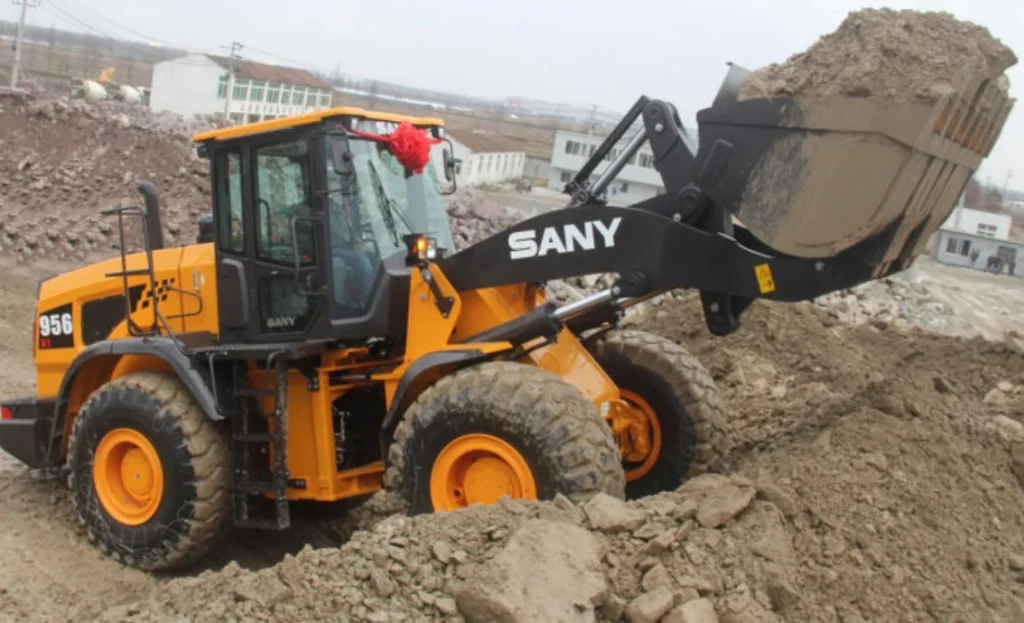
Wheel loaders are versatile engineering machines that are widely used on construction sites, in mining, agriculture and other industries. They are excellent at quickly loading, transporting, lifting and unloading materials: sand, gravel, soil, coal and construction debris. However, operating a wheel loader requires special skills, and operators must be comfortable with the control system. This guide outlines the key operational aspects and techniques of operating a wheel loader to improve safety and efficiency.
Front loader control system overview
Before studying control methods in detail, it is useful to familiarize yourself with the main components of this type of engineering equipment, as well as the key functions and operational tasks of each part.
1. Traffic controls
Main components: steering wheel, gear selector, accelerator pedal, brake pedal and other elements.
Main functions and tasks: control of the direction of movement, speed regulation and braking, which ensures the accuracy of movement and safety of the front loader.
2. Boom and bucket controls
The main components are: boom, bucket, hydraulic system and control levers that ensure their operation.
Main functions and tasks: performing basic working movements - raising/lowering the boom and tilting/dumping the bucket, which ensures the efficiency and accuracy of loading, transporting and unloading operations.
3. Other machine controls
Main components: auxiliary units and control devices - lighting system, signaling and warning devices, air conditioning and ventilation system.
Main functions and tasks: control of lighting (headlights, turn signals, warning lights) for clear visibility at night or when moving between sites; notification of equipment malfunctions and warning personnel, eliminating potential safety threats; increasing operator comfort in harsh working conditions (high temperature, dust, etc.).
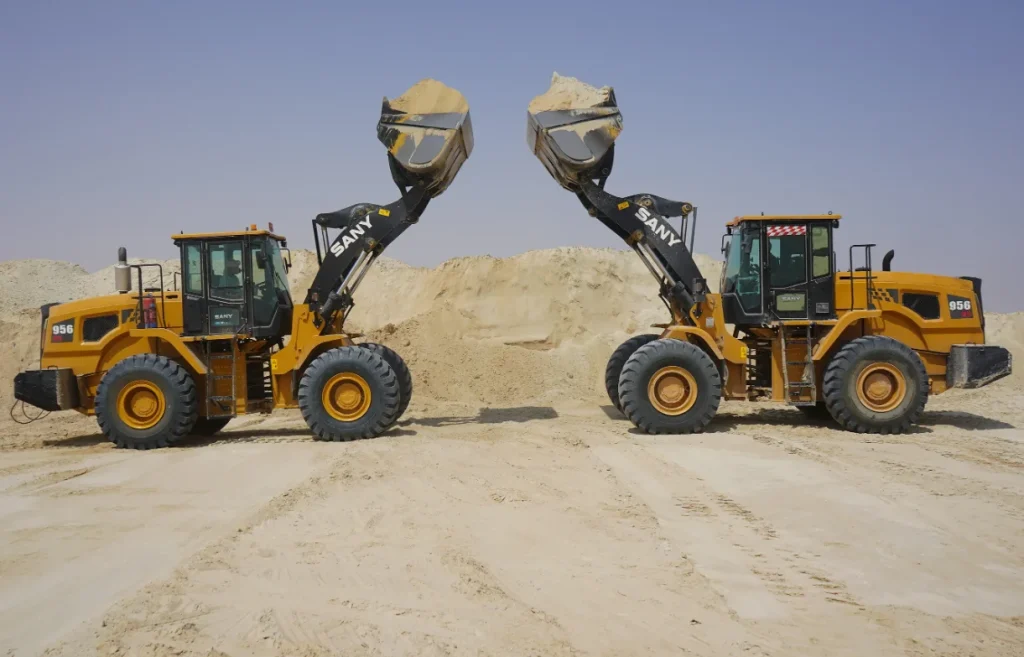
Preparing to work on a front-end loader
To ensure safe and efficient operation of a front loader, training should be carried out in a standardized and consistent manner. Pay particular attention to two aspects.
1. Preoperative check-up
In addition to assessing the conditions of the work site, carefully inspect the equipment's appearance, hydraulic system, powertrain, and controls to eliminate potential hazards.
Worksite inspection
Check for overhead power lines, obstacles, holes or uneven ground. Make sure all personnel have left the work area.
Checking the appearance of the equipment
Inspect the machine body for dents or deformations; check the bucket and boom for wear or cracks; check the tire pressure (for track loaders, track tension).
Checking the hydraulic system
Check hydraulic hoses and connections for leaks; make sure the hydraulic oil level is within normal limits and the oil is clean.
Powerplant check
Check engine oil, coolant and fuel levels; clean the air filter element; make sure the battery is connected securely.
Inspection of management bodies
Before starting, check that the control levers and pedals move smoothly and without binding; make sure that the indicator lights and displays are working properly.
2. Safe forklift start
After completing the pre-operational checks, the operator must start the equipment in a safe and standardized manner. Follow the steps below.
Preparing for landing
Wear personal protective equipment (PPE): a hard hat and non-slip shoes. Maintain balance when opening the door to avoid falling. Use the “three-point support” method when boarding – both hands and feet should touch the handrails or footrest of the equipment for stable entry into the cabin.
Pre-launch settings
Fasten your seat belt and other restraints; adjust the seat and steering wheel to a comfortable position; make sure the transmission is in neutral; close the cab doors and windows to reduce dust inside.
Starting and warming up
Insert the key into the ignition to start the engine. Allow it to idle for 3 to 5 minutes to warm up (warm-up time will increase in cold conditions).
Post-launch check
After the engine has warmed up, check the surrounding area again. Only after making sure that there are no safety hazards, release the parking brake and prepare for work.
Step-by-step procedure for working on a front-end loader
From a practical perspective, the key to operating a front-end loader is to perform operations in a standardized and consistent manner with meticulous attention to every detail.
1. Movement and positioning
Traffic management
Control acceleration and braking with the pedals and direction with the left joystick or steering wheel to safely move the machine into the work area. Control your speed while driving, especially avoiding sudden starts and sharp turns.
Positioning
Before starting work, adjust the distance between the machine and the material, taking into account the location of the pile and the boundaries of the work area. Make sure that the center line of the bucket is aligned with the center of the pile of material.
2. Capture, transport and unloading
Capture operation
With the bucket cutting edge horizontal, drive straight into the pile of material, slowly bringing the bucket to the ground, and raise the boom slightly to maintain traction. After filling the bucket, fold it in while pulling the boom back. To grab large pieces or hard soil, insert the bucket gradually.
Transportation operation
After grabbing, before backing away from the stack, level the bucket and lower the boom. Then drive to the unloading location at a steady speed.
Unloading operation
As you approach the dump point, raise the boom. Then slowly move forward and dump the material. After unloading, return the bucket to its original position, slowly lower the boom, and prepare for the next cycle.
3. Digging and soil development
In the absence of an excavator, a front-end loader can effectively develop solid structures and dig hard soil, gravel, or shallow trenches through the coordinated use of the boom and bucket.
Positioning and penetration
Position the machine in front of the digging point. Adjust the bucket so that its base is on the ground and tilt it forward, inserting the cutting edge into the soil.
Digging and loading
Move forward, digging the bucket into the soil and tilting it to load. Raise the bucket off the ground and drive away with a full load. If digging cannot be done in one pass, penetrate and develop the material in stages.
Unloading of material and further operations
Transport the material to the designated location, raise the boom and dump. Lower the bucket, return to the work area and repeat the steps described.
4. Planning and leveling
With the help of a bucket, a front-end loader can scrape or move gravel, mulch, and soil to effectively level and clear the surface.
Clearing operation
Mark and pre-clear the work area, removing mainly weeds, bushes, trees and large rocks. Load materials into the bucket to balance the equipment.
Alignment operation
Keep the bucket parallel to the ground and move forward. Repeat the operation, cutting off the raised areas and leveling the mulch. For dragging operations, lower the bucket to the ground and move in reverse to level the surface. Repeat until the desired ground level is reached.
5. Proper completion of work
After completing daily operations, properly parking the equipment in the appropriate location is a key practical aspect of operating a front-end loader.
Preparing for parking
Park the equipment on a level, safe parking area away from hazardous areas such as piles of material and excavations. Engage the parking brake, return the bucket to its home position, lower the boom, and place the bucket base on the ground.
Parking and post-inspection
Stop the engine and remove the key. Check for oil or coolant leaks and remove debris from the cab. After confirming safety, exit the cab and close all doors and windows.
Important Note: Control methods may vary depending on the type of front loader. Always refer to the specific equipment’s operator’s manual. Wheel loaders, backhoe loaders, and skid steer loaders have different operating characteristics, so it is important to learn the relevant control differences before operating each machine.
Safety rules for working with a front-end loader
To improve operational safety, it is necessary not only to master the practical aspects of operating a front-end loader, but also to strictly adhere to operator requirements, site safety rules, and regulations for the safe operation of equipment.
1. Requirements for operators
Standardized qualification and certification
Operators must be professionally trained and certified. Unauthorized work is strictly prohibited.
Maintaining good physical condition
Operators must be well rested. It is forbidden to operate the equipment when tired, intoxicated or after taking medication that reduces concentration.
Use of protective equipment
Personal protective equipment (PPE) — a hard hat and non-slip shoes — must be worn properly. It is prohibited to operate the equipment in slippers, heels, or loose clothing.
2. Safety rules on the site
Preliminary site inspection
Clearly define work boundaries and danger zones (excavations, high-voltage lines, steep slopes, dead zones). Install warning signs and prohibit unauthorized persons from entering the work area.
Maintaining a safe distance
Keep bystanders and support personnel at a safe distance. Avoid having multiple people working under the bucket or in the boom area at the same time.
Emergency response on site
In case of emergency situations during operation (equipment malfunction, appearance of unauthorized persons), immediately stop operations, engage the parking brake and resume operation only after the problem has been eliminated.
3. Regulations for the safe operation of equipment
Safety comes first. When operating the front loader controls, a number of unsafe actions are strictly prohibited, including the following.
Overloading prohibited
The weight of the loaded materials must not exceed the rated load capacity of the equipment to avoid the risk of the loader tipping forward or damaging the hydraulic system.
Prohibition of unauthorized lifting
Do not use the bucket to lift personnel or equipment. For work at height, use specialized lifting equipment.
Prohibition of maintenance during operation
Do not open the hydraulic oil tanks, engine compartment or other components for maintenance while the equipment is running. Stop the machine and disconnect the power before making repairs.
Training and certification of front-end loader operators
Heavy forklift operators must undergo training and obtain operational qualifications. The training content and requirements are as follows.
Theoretical training
Study of basic theoretical knowledge: design and principles of operation of the forklift, operating instructions, safety rules, identification of malfunctions and their elimination. Passing a written exam.
Practical training
Under the guidance of specialists, training in control: starting, movement, loading, transportation, unloading, leveling, etc., in order to achieve confident and standardized work.
Emergency response training
Simulation of emergency scenarios: equipment malfunctions, slips on slopes, personnel intrusion - to practice emergency response skills so that operators can act quickly and correctly in critical situations.
To effectively master the operational aspects of operating a front-end loader and comply with industry standards and legal requirements, it is recommended to undergo training and obtain a certificate from specialized institutions, which will confirm competence in the knowledge and skills necessary to perform the work.
Conclusion
During field operations, controlling a front-end loader is key to ensuring that this engineering equipment performs its tasks smoothly and efficiently. Whether you are an experienced operator or a novice, it is necessary to fully master the principles of controlling a front-end loader and handle it correctly and safely to maximize its capabilities on site and increase overall work efficiency.
Frequently Asked Questions (FAQ)
How to use a front loader on a tractor?
Using a front-end loader on a tractor requires professional training, obtaining a qualification certificate and strict adherence to safety regulations. From a practical point of view, the following aspects should be considered.
Equipment check
Check the tractor tire pressure, brakes, engine oil, coolant, hydraulic oil, and fuel levels. Also inspect the loader bucket and boom, and other components. Check the connection bolts and pins between the loader and the tractor for tightness.
Procedure
Start the tractor engine, let it warm up and make sure the hydraulic system has normal pressure. Drive to the work area and use the hydraulic controls to raise, lower and tilt the bucket when loading materials. Transport the materials to the unloading point, slowly lower the bucket and tilt it to unload.
Actions after work
After completing the work, promptly clean the remaining materials from the bucket and park the equipment safely in a suitable location.
What controls are on a skid steer?
The controls of this type of front loader mainly include the following categories.
Traffic control system
Used to control the machine's forward, reverse, turn, acceleration, and braking. The main control method is dual joysticks, some models combine pedals with hand levers.
Work equipment management system
Primarily used to control the raising, lowering, and tilting of the bucket (or other attachments). The controls are often integrated into the top of the travel joysticks, although some models have separate hydraulic levers.
Engine and machine condition management system
Typically consists of an instrument panel and a control panel. Provides engine start/stop functions, throttle control, engine speed adjustment, and fault indication.
What can't you do with a front-end loader?
Understanding the operating prohibitions for a front loader is a prerequisite for ensuring safety. In particular, the following high-risk actions are strictly prohibited.
Do not overload the bucket.
An overloaded bucket shifts the machine's center of gravity forward, which can cause it to tip over.
Do not stand or work under the bucket.
Whether the bucket is loaded or empty, the space underneath is a high-risk area. A sudden hydraulic leak or operator error can cause the bucket to fall.
Do not raise or lower the bucket abruptly.
Rapid lifting, lowering or sudden tilting of the bucket can easily cause material spillage and personal injury. It also puts stress on the hydraulic system and frame, which can lead to equipment failure or loss of stability.
Do not travel at high speed with the bucket raised.
Driving with the bucket raised above a safe height significantly raises the machine's center of gravity, making it prone to tipping over when cornering or encountering obstacles.